
Phosphoric Acid (H₃PO₄): A Key Compound in Modern Agriculture
Phosphoric acid (H₃PO₄) is one of the most important chemical compounds in the agricultural industry. With its widespread use in the production of phosphate fertilizers, this inorganic acid plays a vital role in meeting the nutritional needs of plants. In modern agriculture—where the focus is on increasing efficiency, sustainability, and resource optimization—phosphoric acid is not only an essential raw material for fertilizers but also a crucial link in the global food security chain.
1. Phosphoric Acid and Plant Nutrition: Why Is Phosphorus Essential?
Phosphorus is one of the three primary macronutrients in plant nutrition (N-P-K). It plays a key role in root development, cell division, flower and fruit formation, and energy transfer within plants. Phosphoric acid is the main source of phosphorus in the production of fertilizers such as:
-
Single Superphosphate (SSP)
-
Diammonium Phosphate (DAP)
-
Monoammonium Phosphate (MAP)
Depending on soil type, climate conditions, and crop variety, these fertilizers provide plant roots with accessible forms of phosphorus.
2. Enhancing Soil Quality and Productivity with Phosphoric Acid
In many regions, agricultural soils suffer from phosphorus deficiency or contain phosphorus that is chemically unavailable to plants. The addition of phosphoric acid or phosphate fertilizers can:
-
Regulate soil pH
-
Provide bioavailable phosphorus
-
Stimulate root biological activity
-
Increase crop yield and quality
Additionally, in greenhouse and hydroponic farming, phosphoric acid plays a key role in pH regulation of water and nutrients. Due to its high purity and fast solubility, it is highly applicable in these systems.
3. Phosphoric Acid in Sustainable and Precision Agriculture
In modern agriculture, inputs are applied in a targeted and optimized manner. Here, phosphoric acid goes beyond being a simple chemical:
-
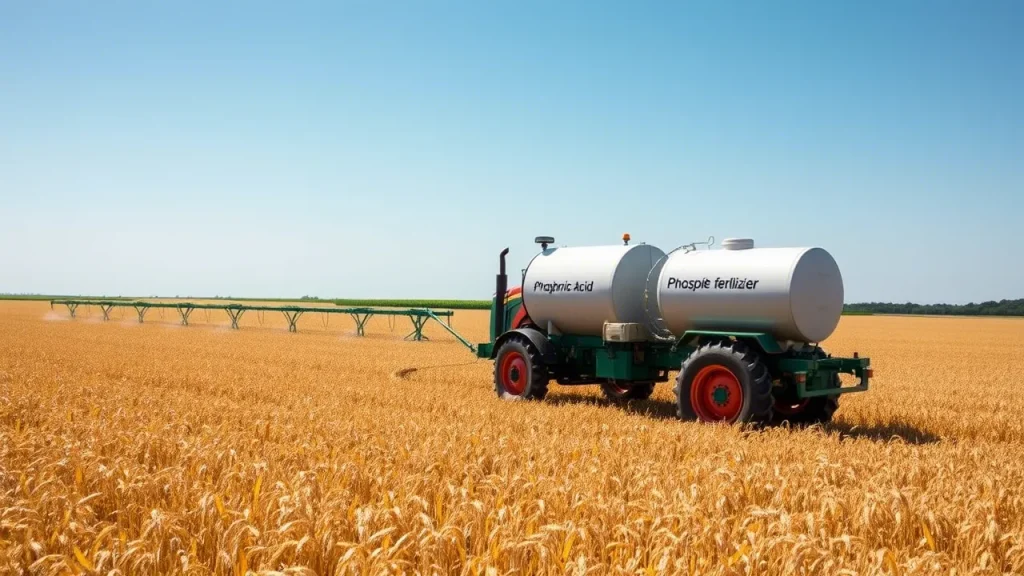
It is used in fertigation systems to deliver nutrients
-
Its dosage is precisely controlled using sensors and smart farm software
-
Phosphorus is applied gradually based on the plant’s actual needs
-
Environmental phosphorus pollution is minimized
As a result, using phosphoric acid in precision agriculture boosts productivity while reducing environmental impact.
4. Challenges and the Future of Phosphoric Acid Use
Despite its significance, there are challenges to phosphoric acid use:
-
Phosphate rock mining, the main source of phosphoric acid, is environmentally unsustainable
-
Global phosphate reserves are limited and concentrated in a few countries (e.g., Morocco and China)
-
Overuse of phosphate fertilizers can lead to water pollution and algal blooms (eutrophication)
Therefore, the future of modern agriculture depends on:
-
Recycling phosphorus from organic waste and wastewater
-
Developing smart and slow-release phosphate fertilizers
-
Managing phosphoric acid use through data-driven farm analysis
Such strategies are essential to ensure long-term sustainability of this valuable element.
Conclusion
Phosphoric acid is a cornerstone of modern agriculture. By providing plant-available phosphorus, improving soil, enhancing productivity, and supporting smart farming systems, it plays a critical role in food security and ecosystem sustainability. However, its continued benefit relies on responsible and scientific use. Without innovative strategies for phosphate management, the future of agriculture may face reduced efficiency and increased environmental harm.